
Old Ways for Modern Life
What Indigenous Teachings Can Tell Us About Burnout, Silence, and the Need to Slow Down
5/11/20262 min read
Modern life moves fast.
Too fast for many people.
We wake to alarms, scroll before our feet touch the floor, rush through conversations, answer messages instantly, and carry a constant feeling that we should be doing more. Even rest has become productive. People now optimise sleep, monetise hobbies, and turn moments of peace into content.
And yet despite all this movement, many people feel deeply tired.
Not simply physically tired - but spiritually exhausted.
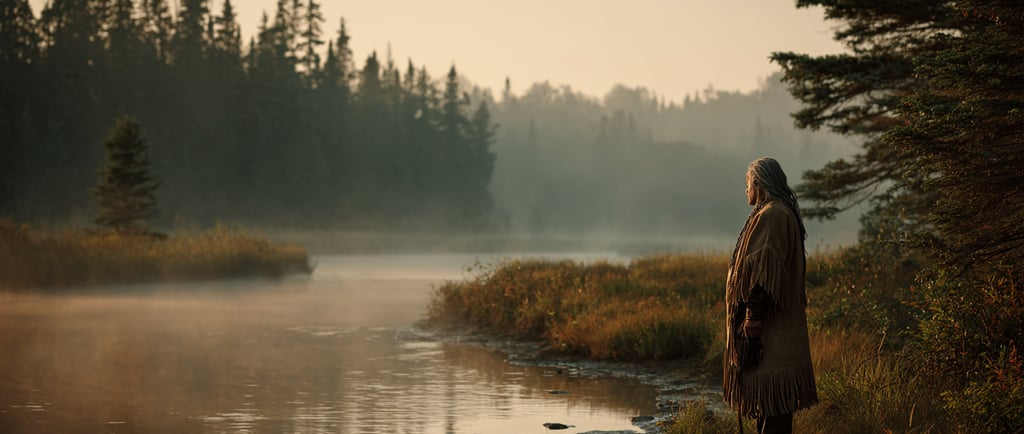
For many Indigenous cultures around the world, life was not traditionally built around constant speed. Time moved differently. Silence had value. Observation mattered. Elders were respected not because they moved quickly, but because they had learned to see clearly.
In many tribal communities, patience was considered a form of strength.
A person who reacted impulsively, interrupted constantly, or sought attention at all times was often viewed as lacking balance. Listening carefully was considered wisdom. Long pauses in conversation were natural. Time spent alone in nature was not seen as "doing nothing." It was part of maintaining connection - to self, to spirit, to the land, and to the wider community.
Modern society often treats silence as uncomfortable.
We fill empty moments immediately:
with noise,
with scrolling,
with opinions,
with distraction.
But many Indigenous teachings understood something that modern life is beginning to rediscover - silence allows the mind to settle. It creates space for clarity.
When people spend every waking hour consuming information, reacting emotionally, and moving from one task to another, they rarely hear their own thoughts clearly anymore. This constant stimulation can slowly create anxiety, exhaustion, irritability, and disconnection.
The old ways approached life differently.
Many Indigenous cultures placed enormous importance on observing the natural world. Nature was not separate from human life. It was teacher, provider, mirror, and guide.
A storm taught patience.
Winter taught endurance.
The wolf taught loyalty.
The river taught adaptability.
Even periods of stillness had meaning.
Today, many people feel guilty when they rest. But rest is not weakness. In traditional cultures, periods of quiet reflection often existed naturally within the rhythm of life. There were moments for action, moments for storytelling, moments for ceremony, and moments simply for being present.
Modern burnout often comes from living in only one state:
constant output.
Human beings were never designed for endless stimulation.
Perhaps this is why so many people now feel drawn back toward forests, mountains, open landscapes, campfires, gardening, walking trails, and slower ways of living. Something inside us still remembers what balance feels like.
The good news is that these teachings do not require people to completely abandon modern life.
Small changes matter.
You can begin by:
walking without your phone for twenty minutes
sitting in silence before sleep
watching a sunrise without photographing it
listening fully when someone speaks instead of preparing your response
spending time outdoors without treating it as exercise or productivity
These are simple acts.
But simple does not mean insignificant.
Many Indigenous teachings remind us that wisdom is often quiet. It does not shout for attention. It waits patiently for people to slow down enough to notice it.
Perhaps modern life does not need more noise.
Perhaps it needs more remembering.
Copyright 2025 Tribal Spirits Art