
The White Buffalo Dream
(Inspired by a Lakota Myth)
5/23/20261 min read
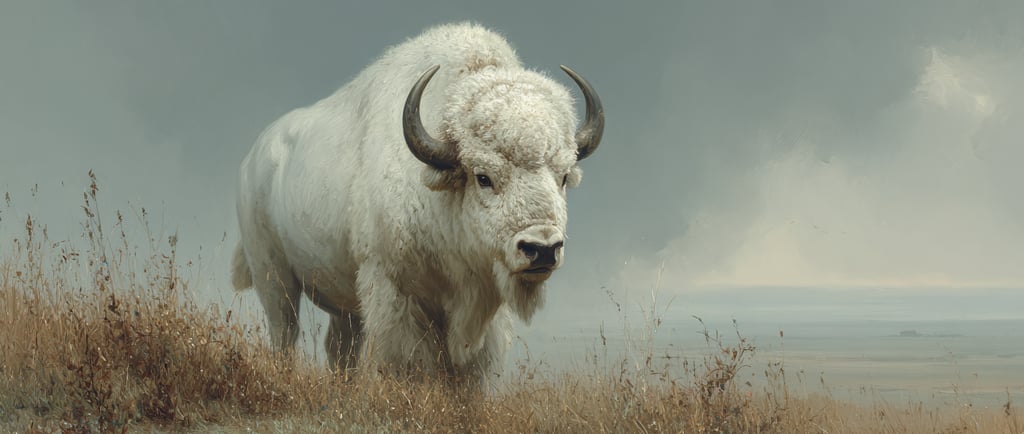
Long ago, when the plains stretched wider than memory and the stars hung low over the earth, the Lakota people faced a terrible winter. The buffalo had vanished, the rivers froze hard as stone, and hunger walked among the tipis like a silent ghost.
In one small camp lived a boy named Mato. Though young, he carried water for the elders and gathered wood for the widows. Yet each night he heard the same sorrowful whispers.
“The spirits have turned from us.”
One evening, Mato climbed a lonely hill and cried out to the heavens.
“Grandfathers, hear me. Show us how to live again.”
The wind answered first. Then the snow began to glow silver beneath the moon.
From the swirling storm stepped a great white buffalo.
Its eyes shone like firelight, and frost bloomed beneath its hooves. Mato fell to his knees, trembling.
The buffalo spoke in a voice deeper than thunder.
“The people have forgotten gratitude. They take from the earth but no longer sing to it.”
Mato bowed his head. “Teach us.”
The white buffalo lowered itself beside him. From its breath came warm summer winds carrying the scent of grass and rain.
“Tomorrow,” it said, “tell your people to gather. They must offer thanks before they hunt, and they must share every gift they receive.”
When dawn arrived, Mato returned to the camp and spoke of the spirit buffalo. Some laughed, but the elders listened carefully. Together the people built a sacred fire. They sang old songs nearly forgotten by time.
As the final drumbeat echoed across the plains, dark shapes appeared on the horizon.
Buffalo.
Hundreds of them.
The people wept with joy. From that day forward, they honored the land, the animals, and one another.
And sometimes, when winter winds sweep across the prairie beneath a pale moon, the Lakota say the white buffalo still walks there, watching to see whether people remember the old promises.
Copyright 2025 Tribal Spirits Art